
INVISIBLE HISTORIES
Preserving LGBTQ+ spaces through story-led exploration
Client: Invisible Histories
Role: Lead UX Designer
Team: 1 Researcher, 3 Designers
Timeline: 7 weeks
Tools: Figma, FigJam, Illustrator
Launch: Jan 2026 pilot at vanishingspaces.org (NCPTT grant support)
How might we preserve at-risk LGBTQ spaces to display the rich cultural history of the American south?
What we’re solving
Invisible Histories is an LGBTQ archive preserving queer collections across Alabama, Mississippi, Georgia, and the Florida Panhandle. They are pursuing an NCPTT grant to digitally preserve LGBTQ spaces in the American South over the next 10 years, and my team was brought in to design and build a pilot that could prove the concept. The stories are already there, but the pilot needs a clearer entry point. Maps feel intimidating without context, and 3D tours can read like dead-ends without a guided path.
What we built
Vanishing Spaces gives visitors one clear place to discover, explore, and help preserve LGBTQ spaces. Through decade entry points and guided story cards, people can start with context, stay oriented as they move between places, branch out through the map and related links, and request a site to help the archive grow over time.
What this enables
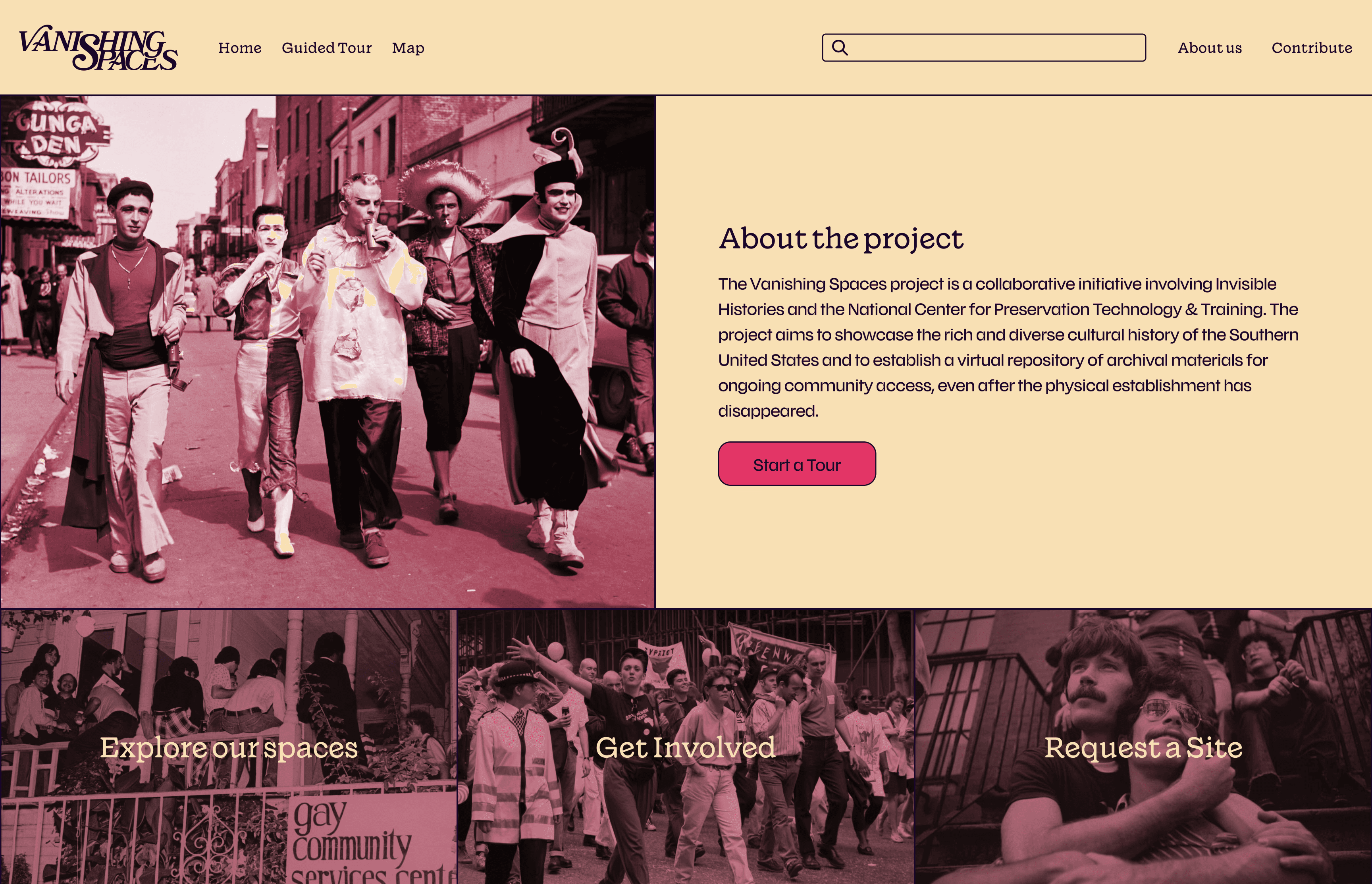
A Living, Immersive Archive Launch
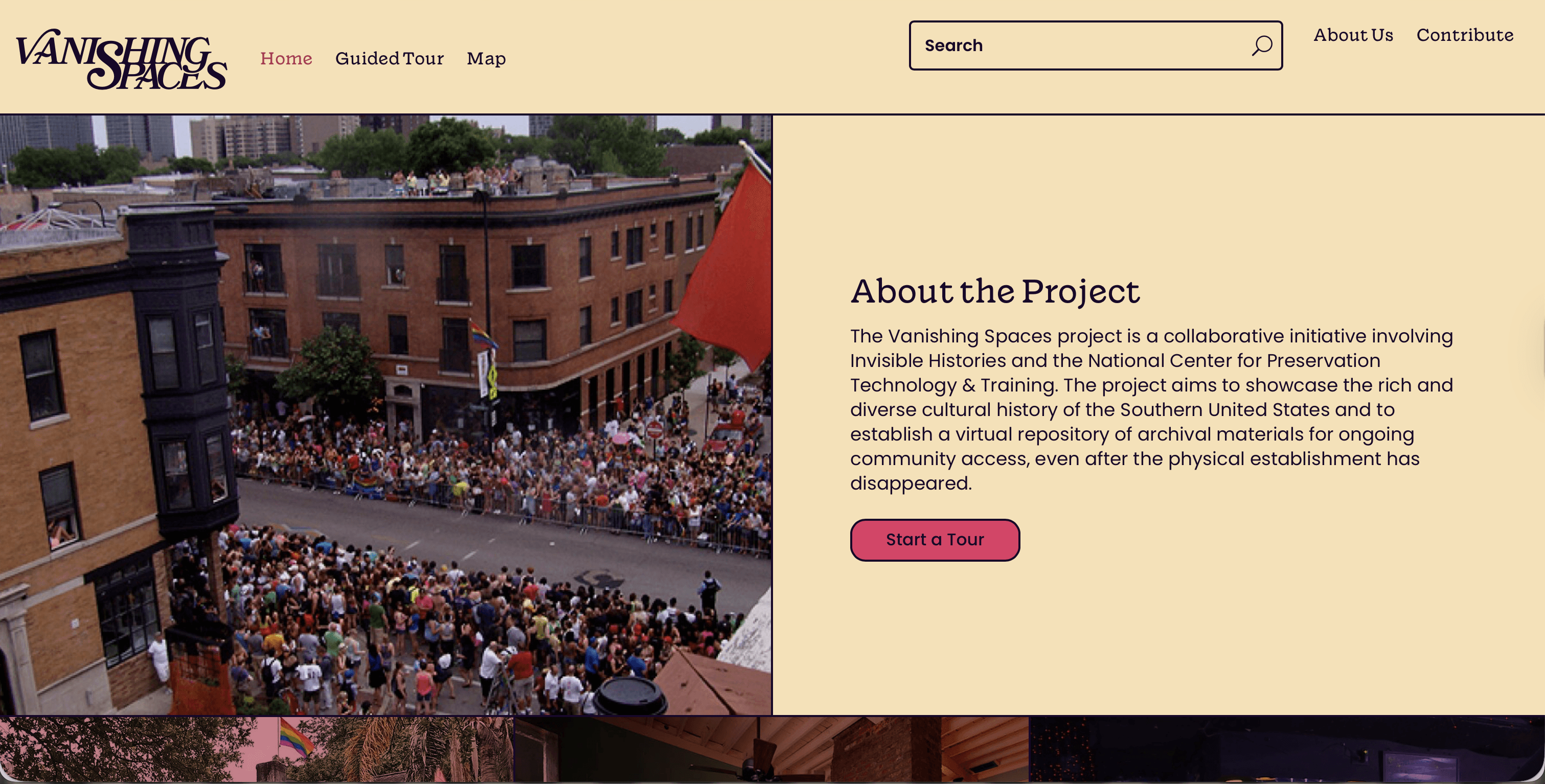
Current site hero (live)
Launched in January 2026 as a working pilot with two fully scanned spaces, Vanishing Spaces validated an end-to-end flow for discovering, exploring, and preserving LGBTQ spaces. The guided-tour pattern set a scalable foundation for adding future sites.
What we learned
Due to a tight seven-week sprint and real platform constraints (including Matterport tour embeds, ArcGIS mapping behavior, and limited content readiness), our research focused on what the grant needed to prove and the systems that would need to work alongside the prototype. We collaborated closely with Invisible Histories, talking with stakeholders to define success criteria, then reviewing adjacent digital archives and virtual tour experiences to see how they balance story, navigation, and discovery.
Stakeholder interviews: Talked with Invisible Histories stakeholders to define success criteria for the grant and capture content and technical constraints (ex: Matterport + ArcGIS).
Competitive analysis: Reviewed map and story archive sites to borrow navigation patterns that keep exploration oriented (clear entry points, wayfinding, and safe exits).
What we found
Story driven
People connect through story before structure, so visitors should be guided through history using narrative and emotional connections over factual documentation.
Branching paths
Users should be able to explore spaces non-linearly, choosing their own path through the archive based on interest rather than being locked into a single chronological flow.
Past and present
The project must honor the past while remaining relevant to present-day LGBTQ communities.
Design moves
We led with story by using decade-based entry points (see Travel by the decade below) instead of dropping visitors into a map or metadata. From there, we designed the guided tour with clear branching moments that make it easy to explore without getting lost.
Proof moment: Story-first entry + map wayfinding + safe exits
Constraint: Archive experiences often start map-first (intimidating) or go scroll-only (easy to lose your place), and our platform reality added a hard split between ArcGIS map behavior and Matterport’s “drop you into a new world” tours.
Design move: We combined the strongest navigation patterns we saw in competitive research and built them into one flow: a story-first starting mode (decades) plus clear wayfinding (Previous/Next + map context) plus safe exits (Explore links + back to map), so the 3D tour feels like a guided step instead of a dead-end.
Outcome: The prototype keeps people oriented while still supporting non-linear exploration, and it makes jumping between story, map, and tour feel intentional instead of fragmented.
Decision receipts
Mode-based entry points: In early drafts, map-first navigation felt like “where do I click?”, so we led with decade cards as the default starting mode and offered the map as a secondary path for branching.
Safe exits: Scroll-led story pages can turn into a one-way tunnel, so we designed consistent “keep moving” options in the story card (Previous/Next + Explore links) and kept map context visible for easy pivots.
Personas
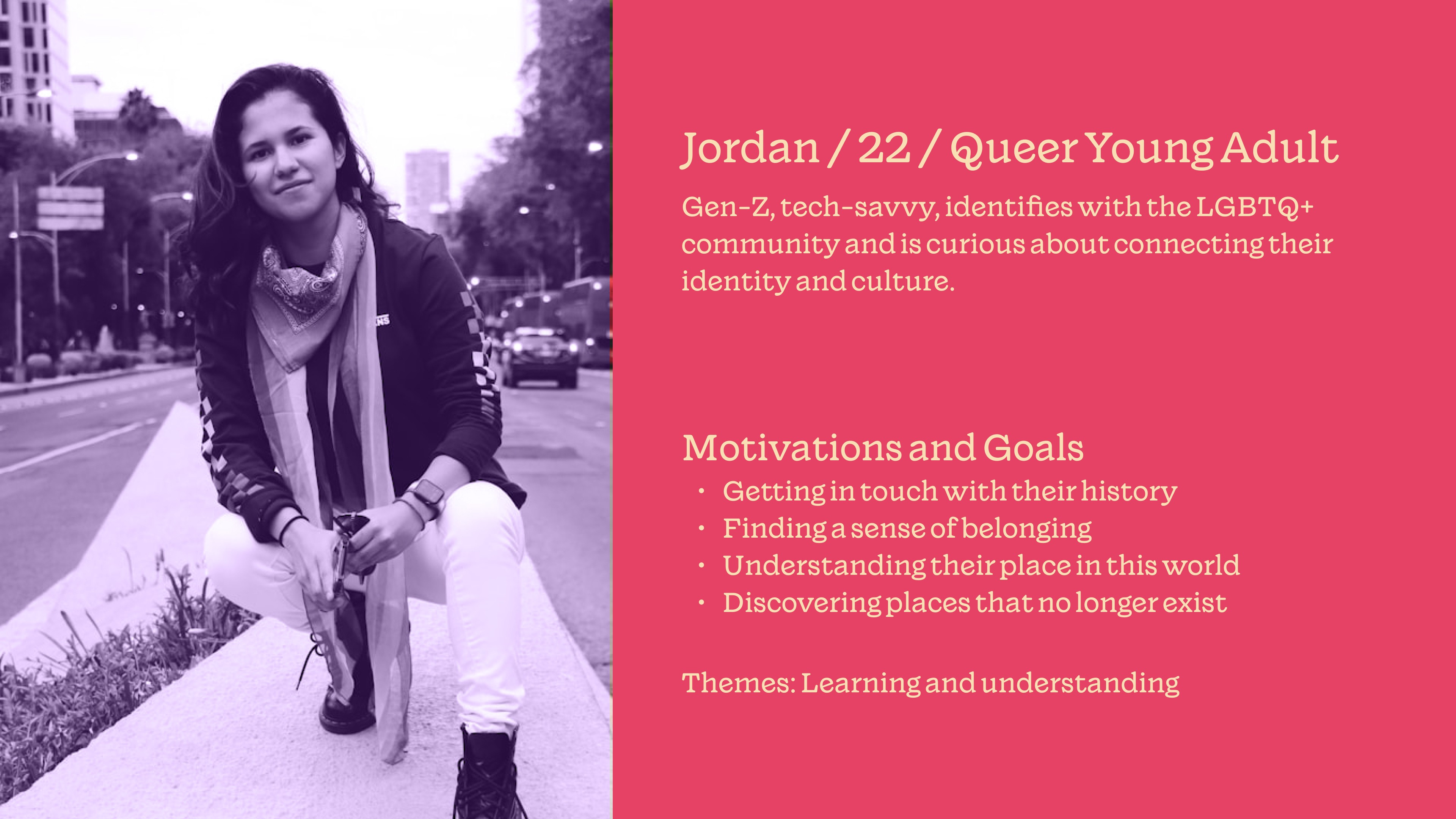
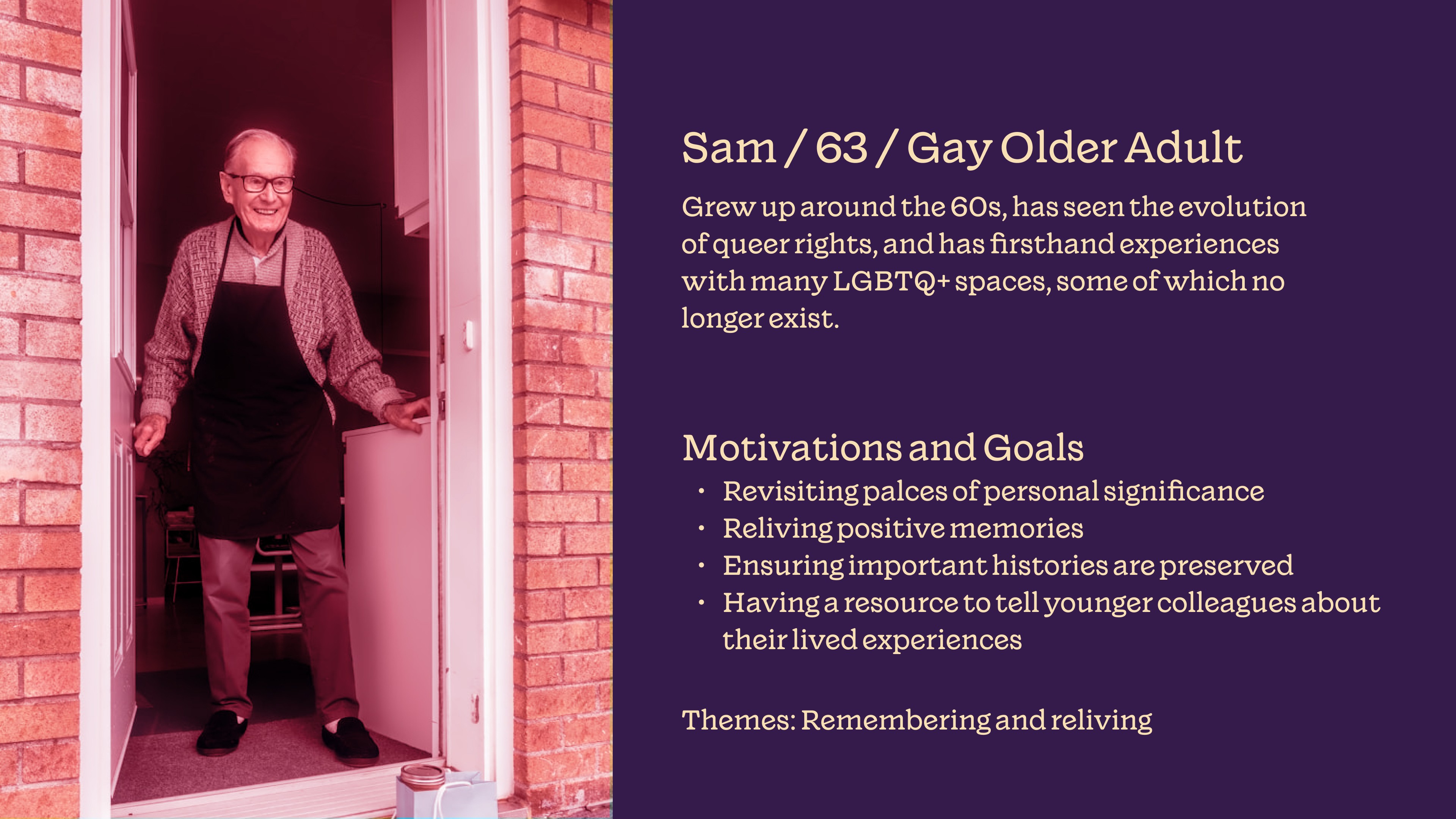
Designed for people who want to learn, explore, and help preserve queer history.
Community members + allies: want a guided start that still feels human.
Researchers + educators: want to explore by time and location without digging.
Curious visitors: want a clear path that doesn’t trap them in a dead-end tour.
We created Jordan and Sam as lightweight personas to keep us designing for both discovery and meaning. They helped us balance a guided entry with enough freedom for visitors to follow their own interests.
Moodboard
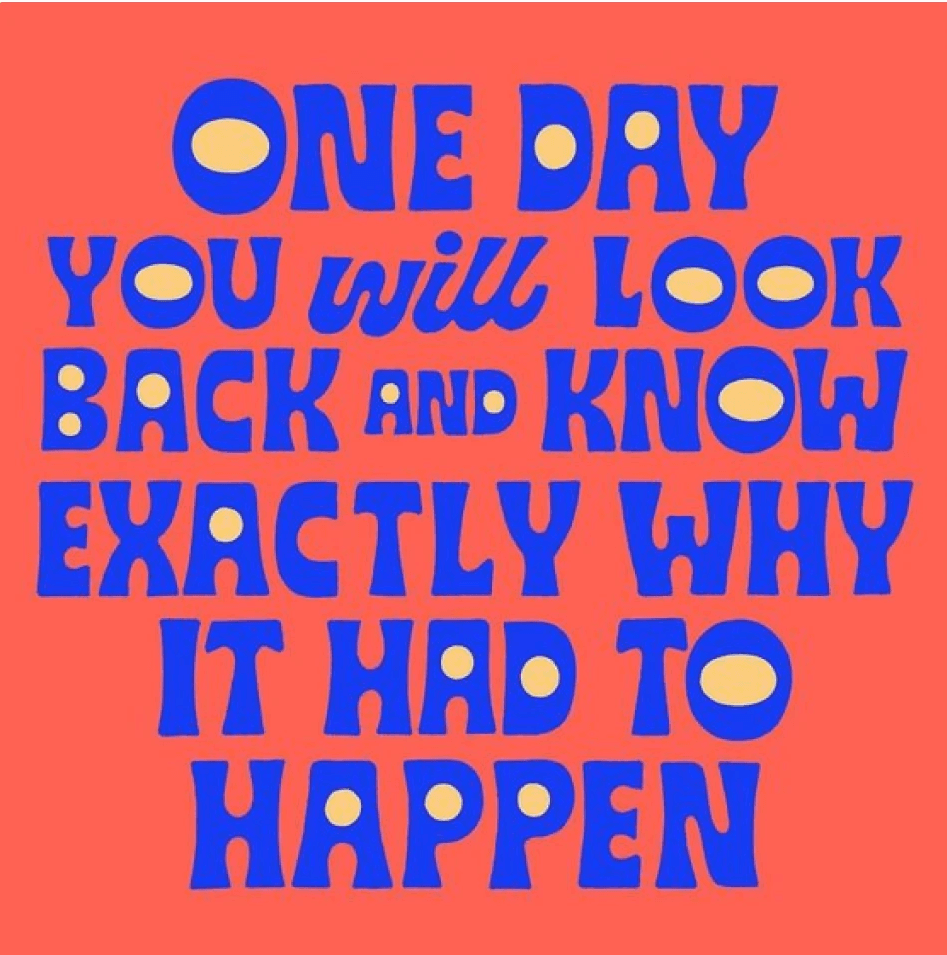
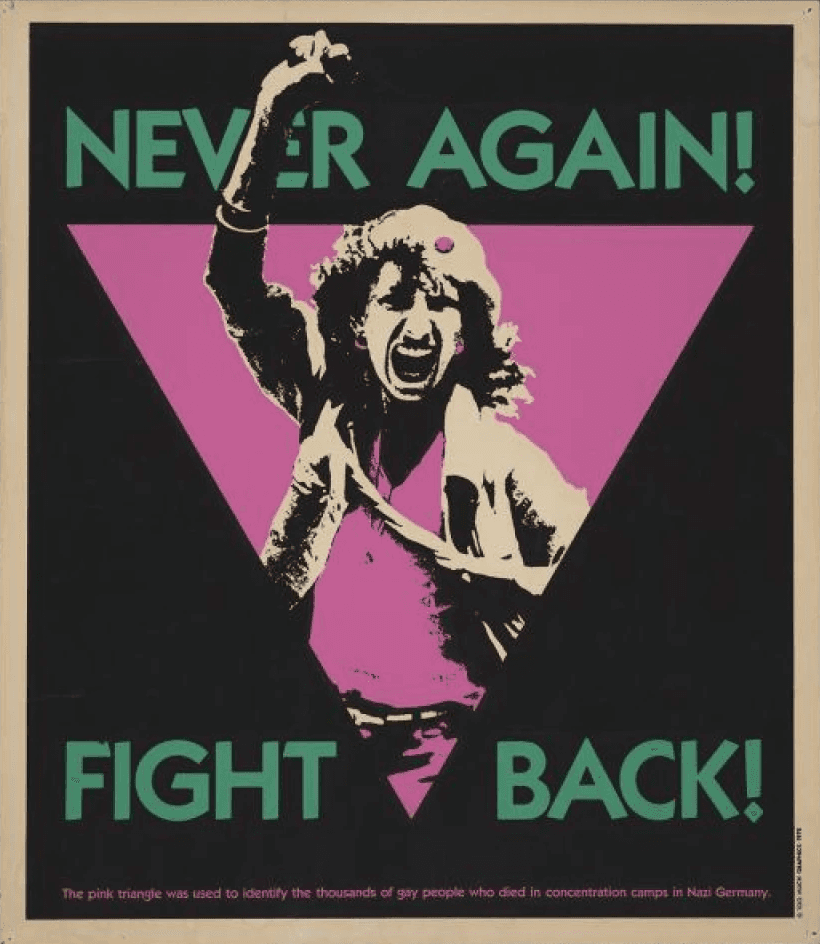
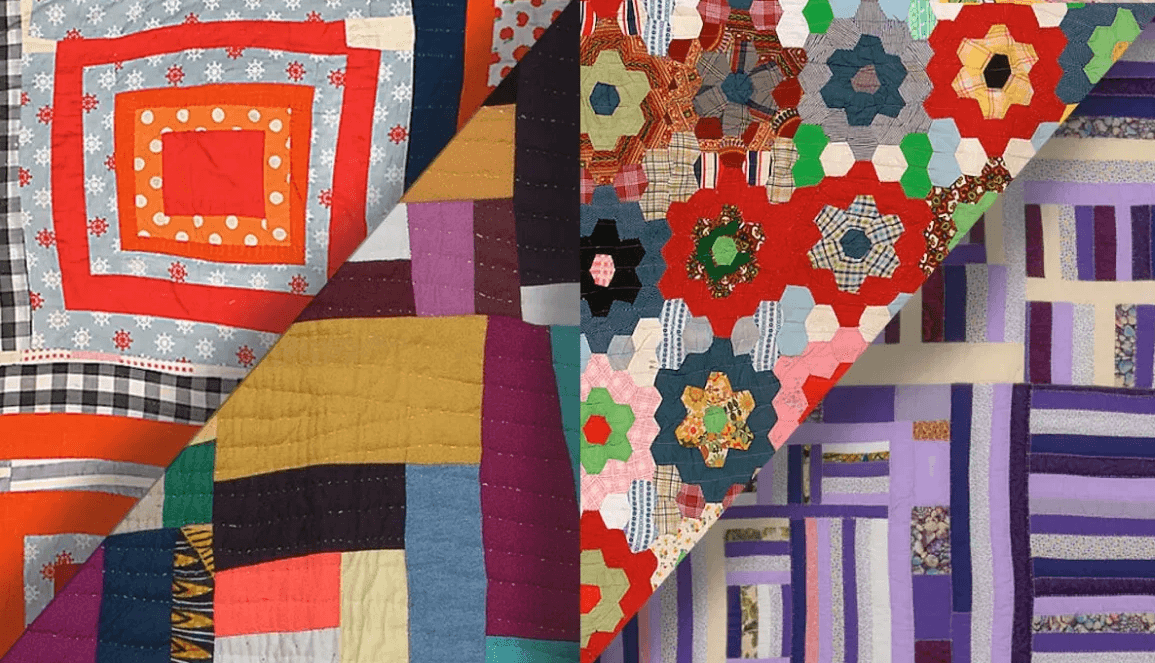
Drawing from our key insights and stakeholder conversations, I built a moodboard to connect nostalgia with newness, pulling from vintage queer ephemera and bold, modern references (yes, even Charli XCX’s brat). The goal was to feel nostalgic but not museum-like: loud, a little unsymmetrical, and alive. This became the north star for the visual direction across the prototype.
How we explored
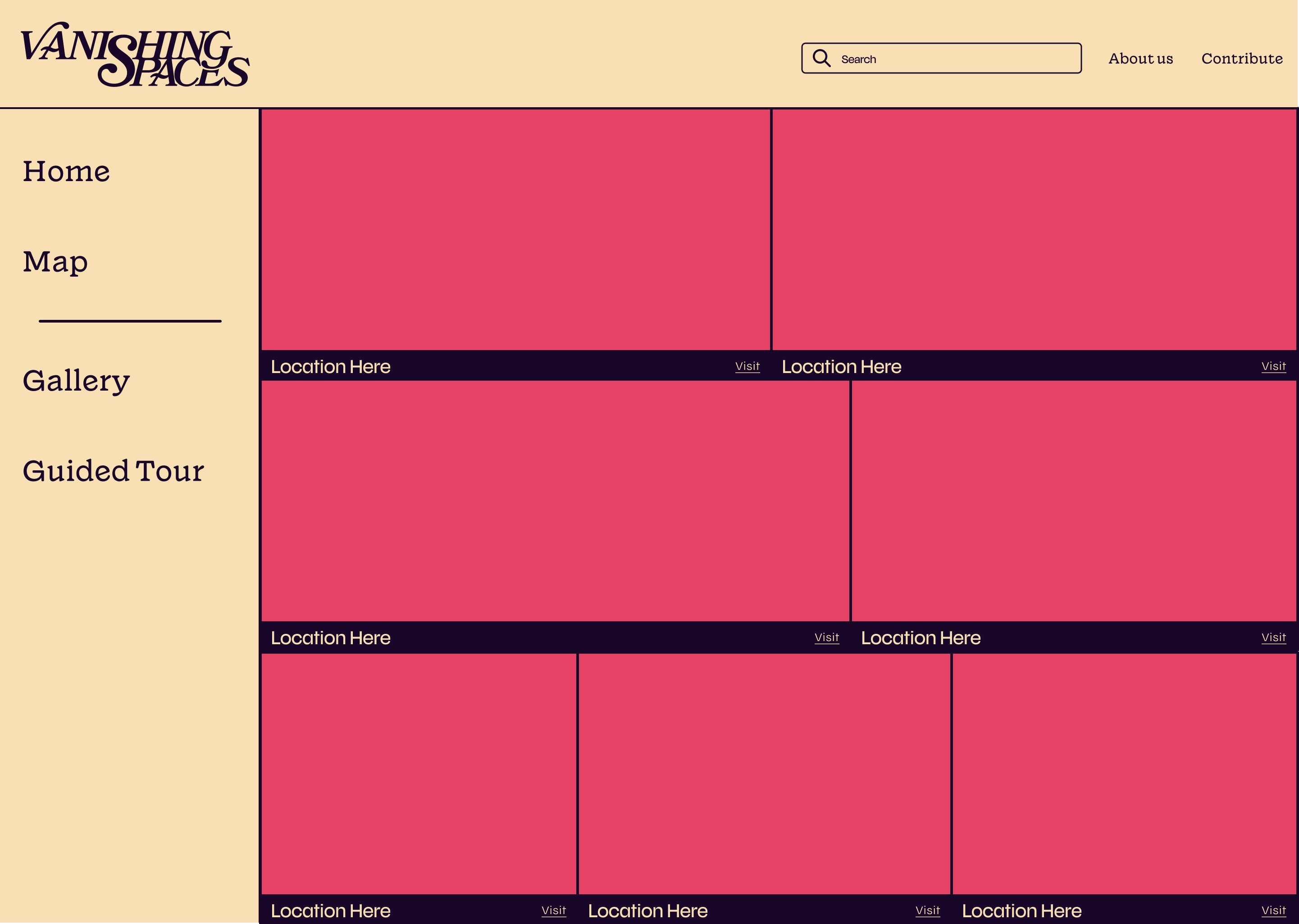
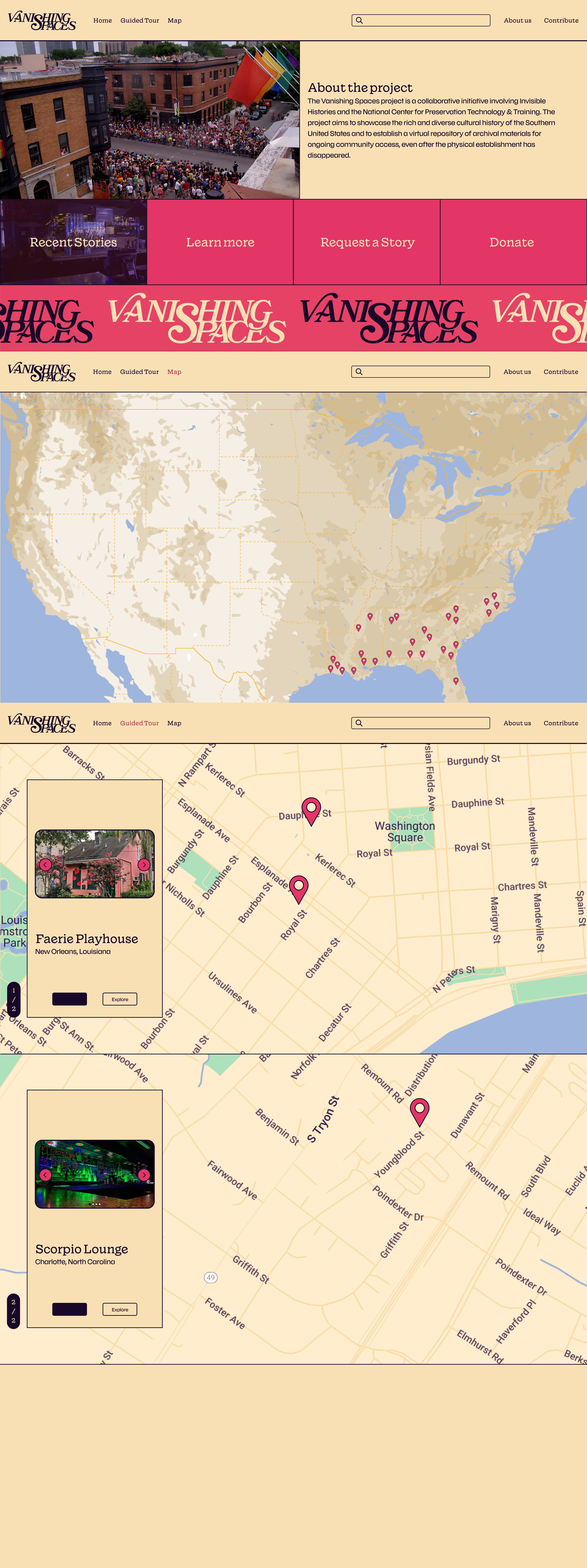
I explored a continuous-scroll structure that balances story and navigation across the landing, map, and story page. In parallel, I defined a simple palette and logo system so the prototype could feel cohesive across the guided tour.
Early prototypes
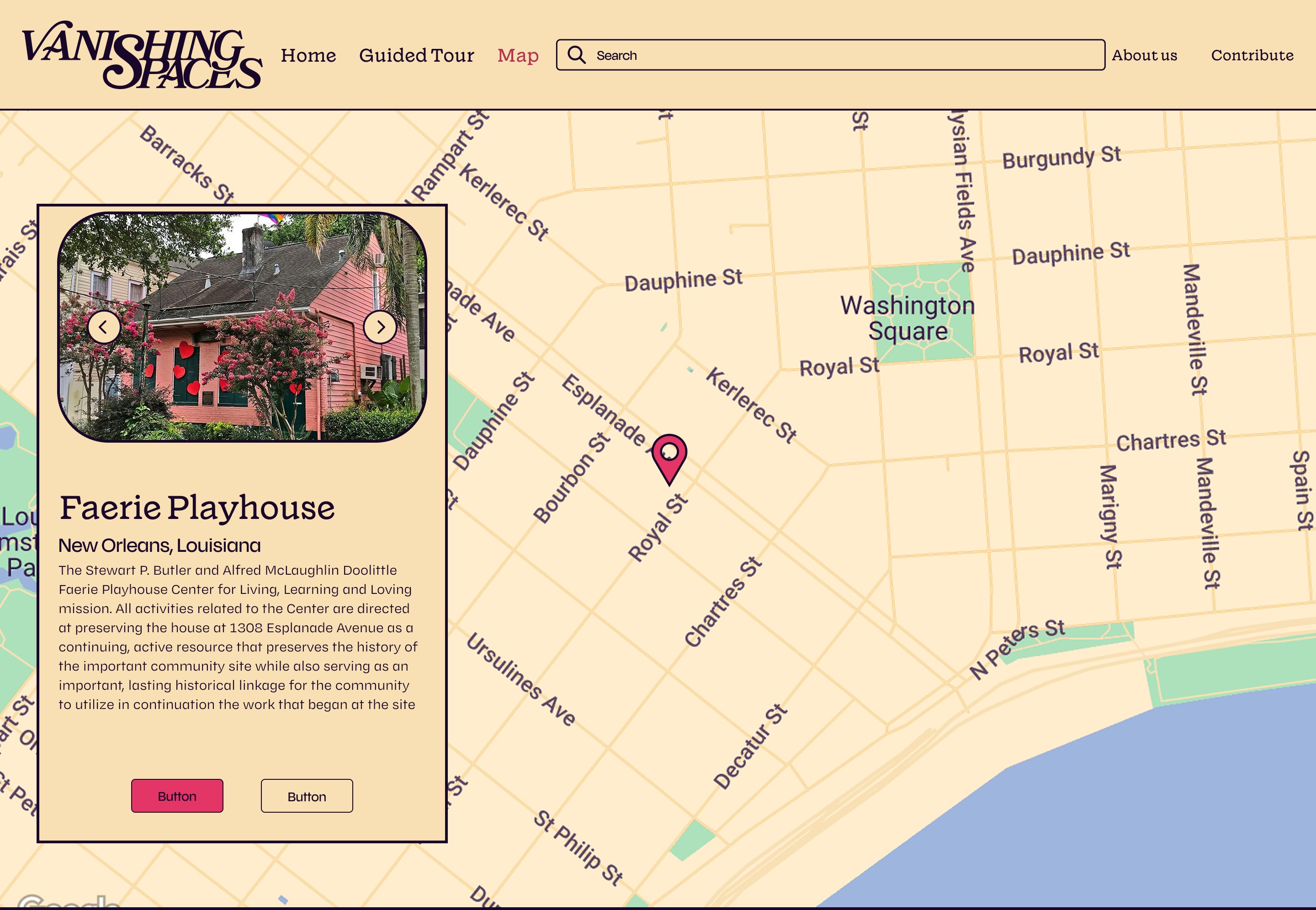
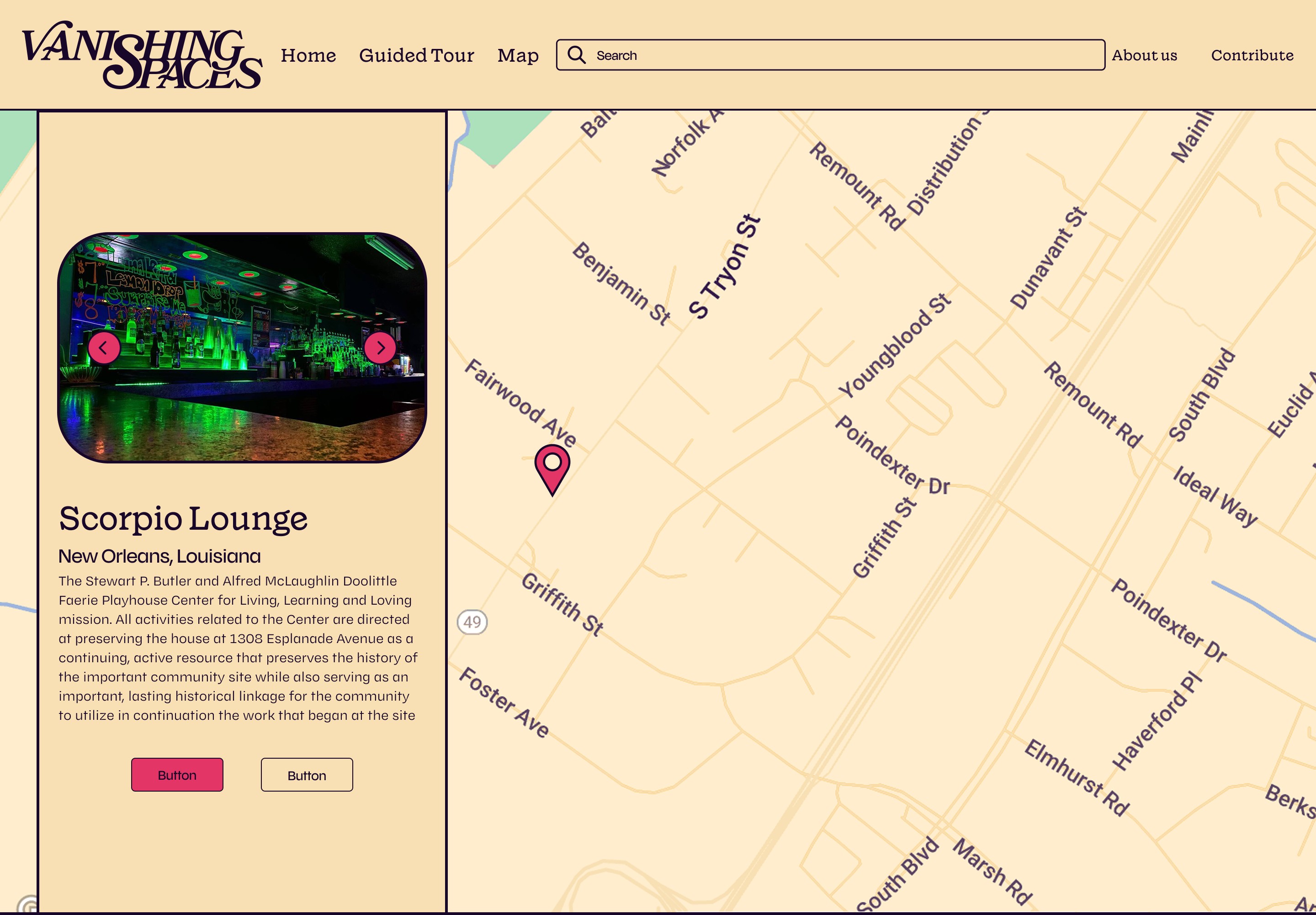
These early prototypes helped me pressure-test the layout system: keeping the tour readable, making navigation feel consistent, and giving visitors clear ways to jump into the parts they cared about.
Accessibility considerations
I wanted the prototype to feel bold and alive without making the experience harder to use.
Color contrast: I checked key palette pairings for AA / AAA contrast and used the light cream mostly as a background or accent. Darker colors carry body copy, navigation, and key information.
Clear navigation: Previous / Next controls help visitors move through the guided tour without relying only on the map.
Map context: The map stays beside the story card, so visitors can stay grounded while moving through the archive.
Guided entry points: Decade cards give visitors a clear place to start before they explore maps, metadata, or individual sites.
Readable structure: Cards, headings, and spacing keep the content easy to scan while still supporting the bold visual direction.
Flexible paths: Visitors can follow the guided story, open Explore links, or enter a 3D Tour depending on how they want to move through the experience.
Site architecture
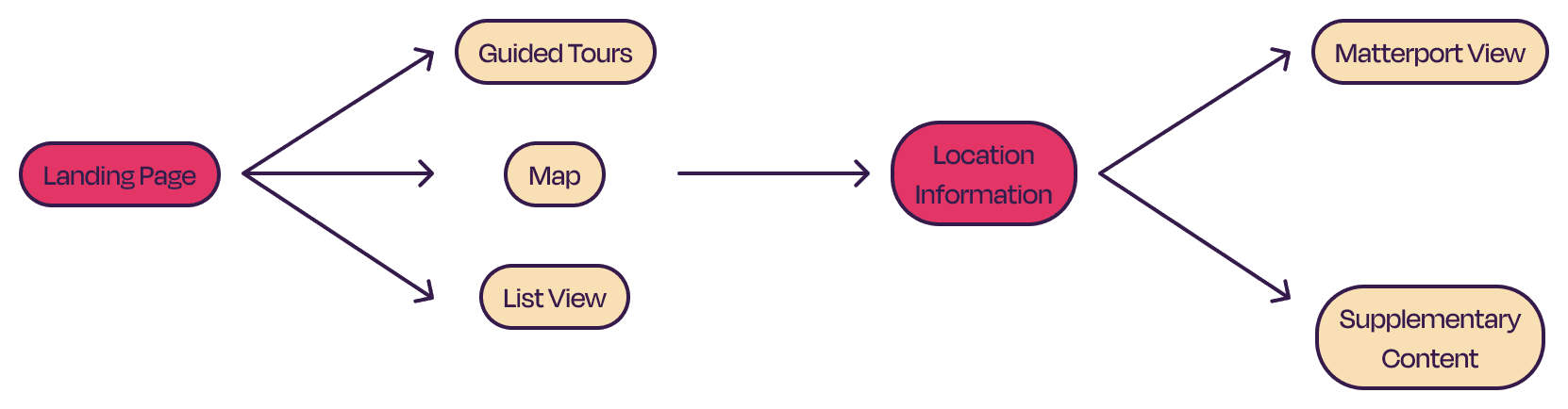
Our researcher translated the team’s early layout ideas into a clear site architecture, showing how the guided tour, map discovery, and individual story pages connect into one flow. I contributed the initial layout concept and interaction direction, and this diagram helped us align on how to organize the main paths through the experience.
Vanishing Spaces
Vanishing Spaces lets visitors move through LGBTQ history at their own pace. They can start with a guided entry point, follow a decade that resonates, and stay grounded in place as they move between sites. Along the way, people can go deeper through Explore links or step inside a 3D tour, making preservation feel approachable, human, and worth returning to.
It all begins here
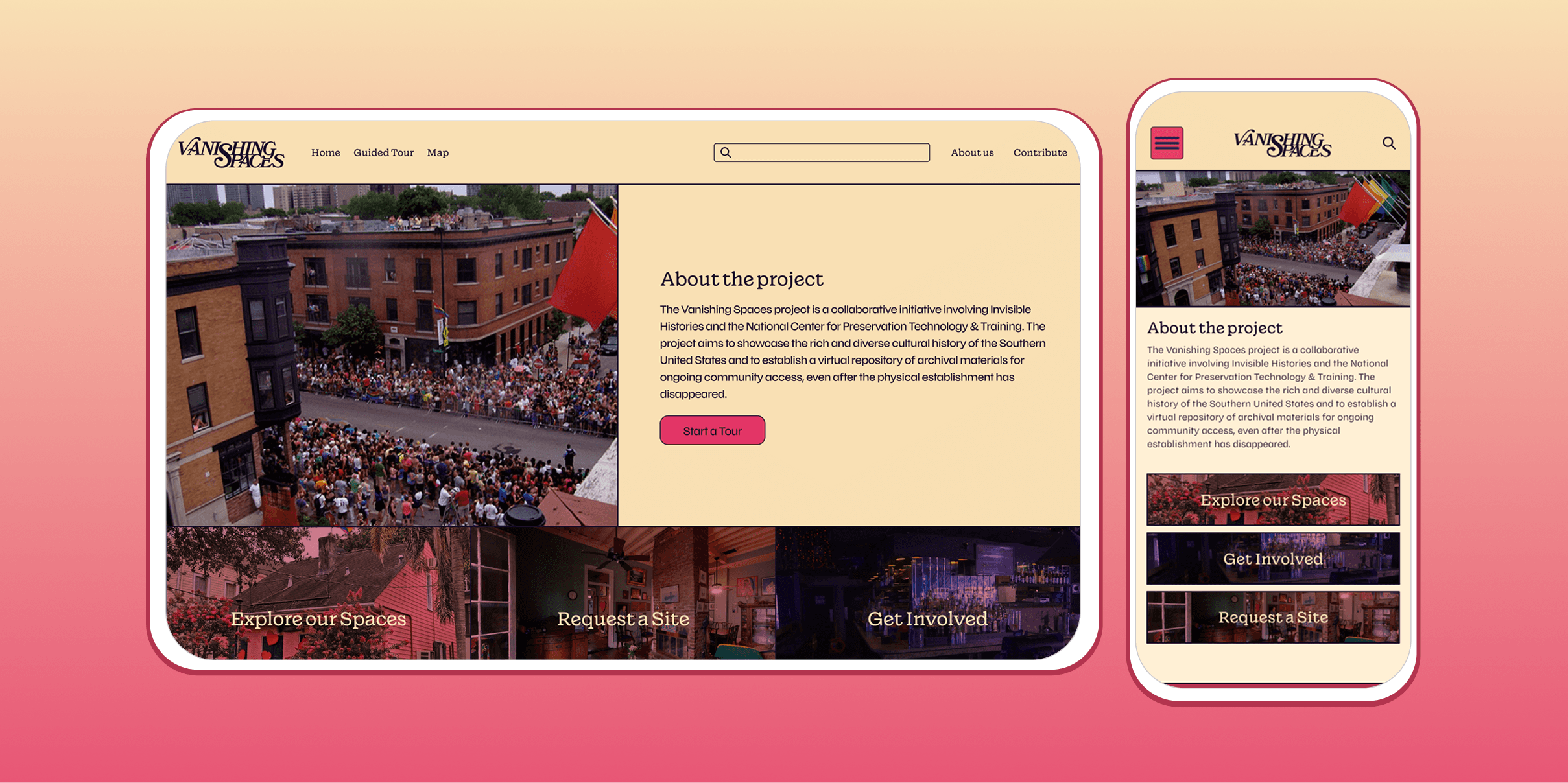
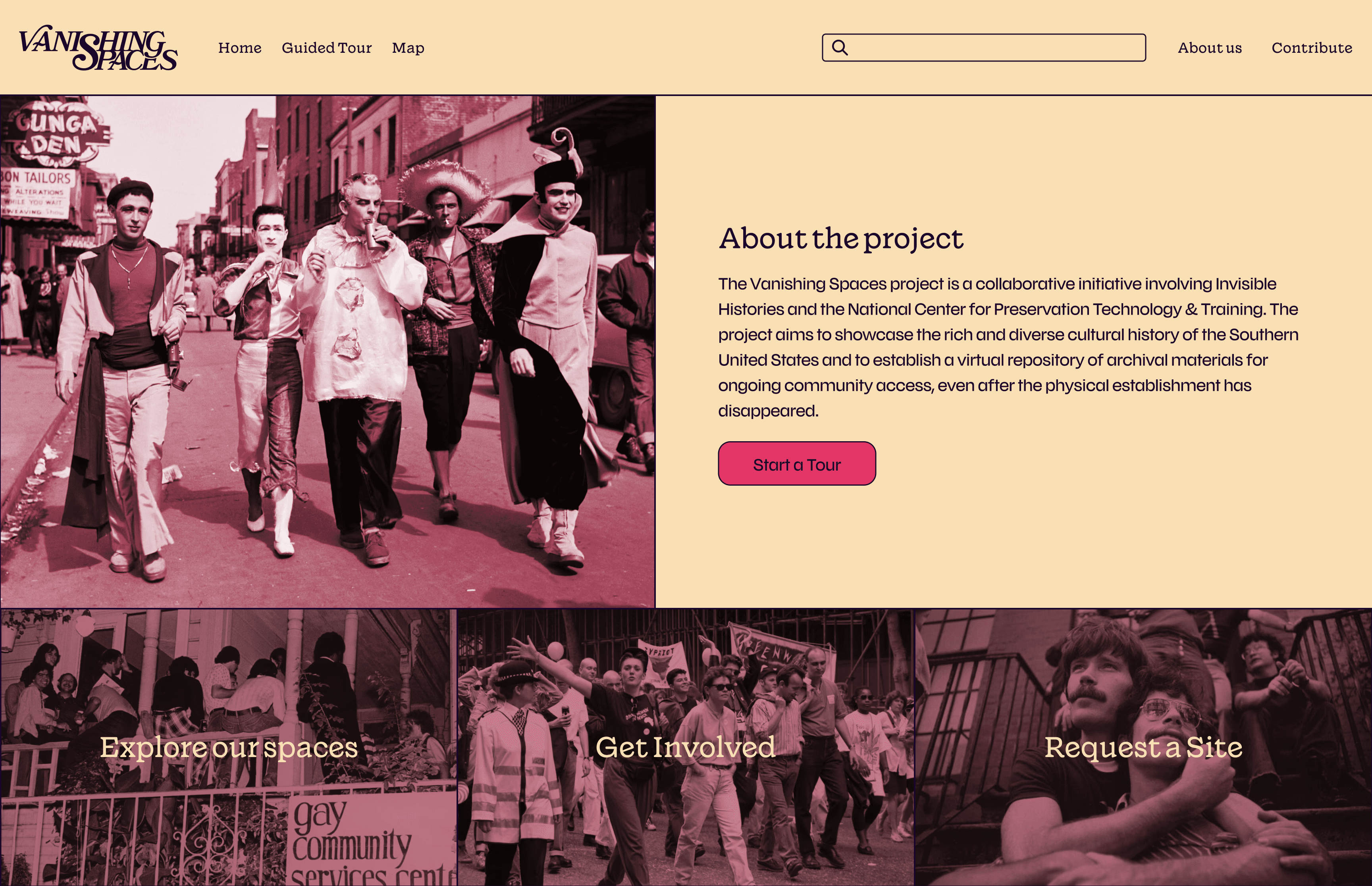
The homepage quickly explains Vanishing Spaces and offers clear paths to start a tour, explore spaces, get involved, or request a site.
Travel by the decade
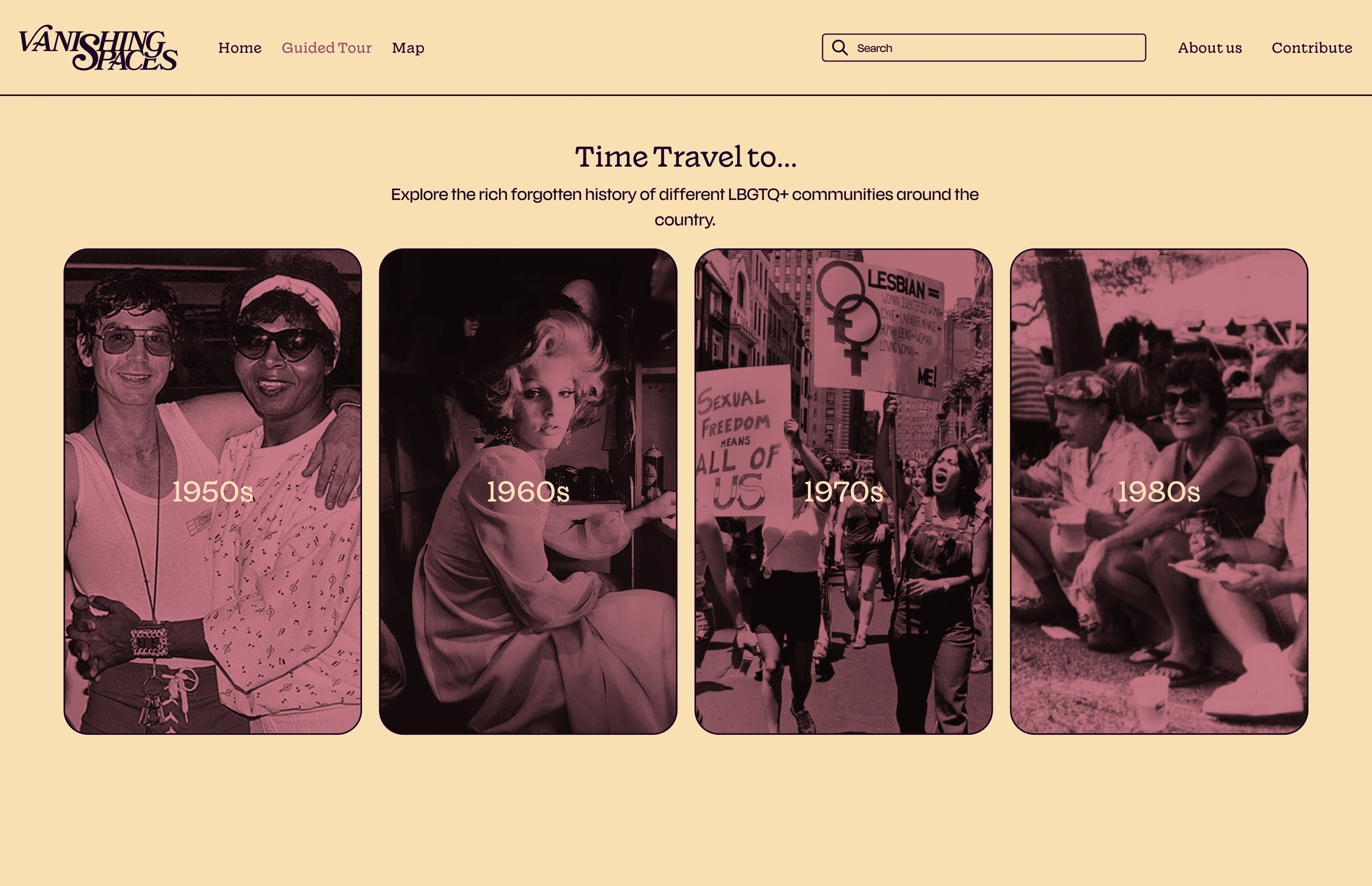
Decade-based “time travel” cards let users enter the archive through story-first exploration before maps or metadata.
Map-Based storytelling
The navigation creates a curated flow, while the story card keeps geographic context visible and gives visitors clear ways to keep exploring.
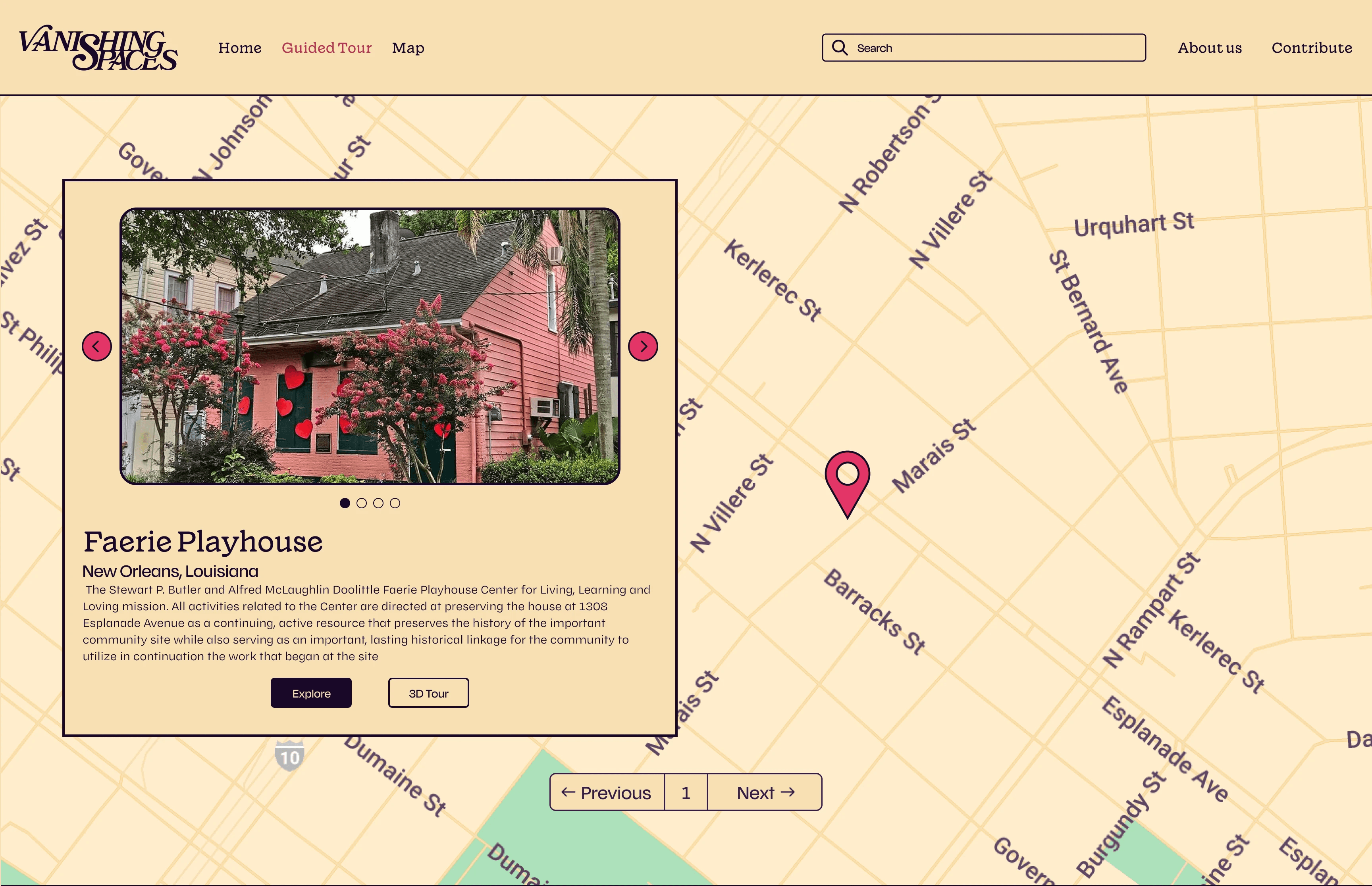
Step inside the experience
What I learned
Though this project was an extremely quick sprint, it sparked my love of creating meaningful designs for others, something that I explored further through my final year at the University of Washington. I also had the opportunity to mentor new UX designers, one in particular wasn’t even in our department! It was truly an honor to work on this pilot project, and it sharpened how I design for emotion and navigation at the same time: keeping story intact while giving people freedom to explore. Next, I’d validate the guided tour with a few quick tests and refine the branching moments so the experience stays smooth as more sites get added.
What I’d validate next
Next, I’d run a short round of tests focused on the guided tour:
Can people enter through a decade and understand what to do next?
Do they stay oriented on the map while they scroll?
Do they understand when to branch into Explore links vs step into the 3D tour?
What I’d track: hesitation points, navigation errors, and drop-off moments.
If you want to see where it landed, here’s the live pilot: vanishingspaces.org